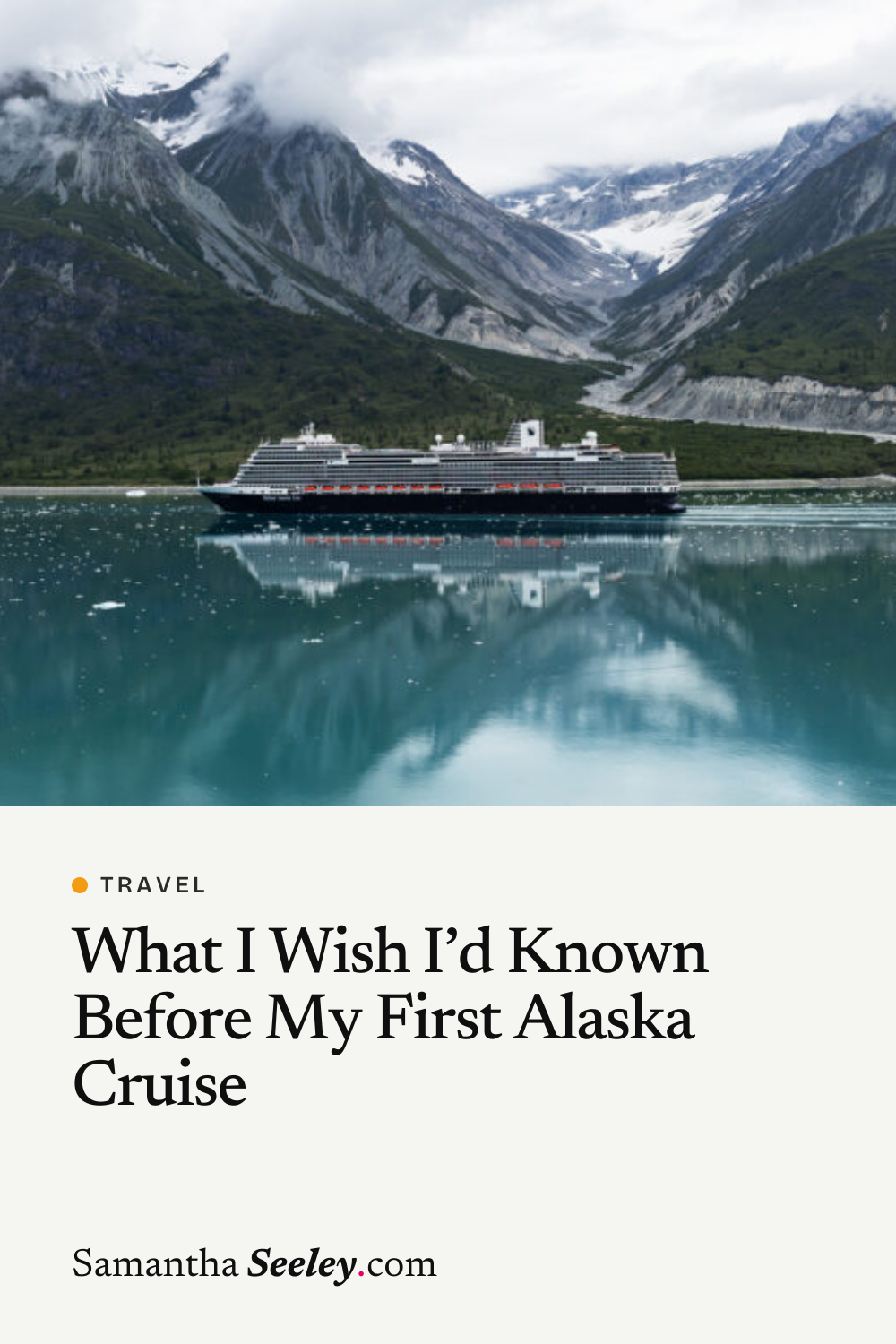
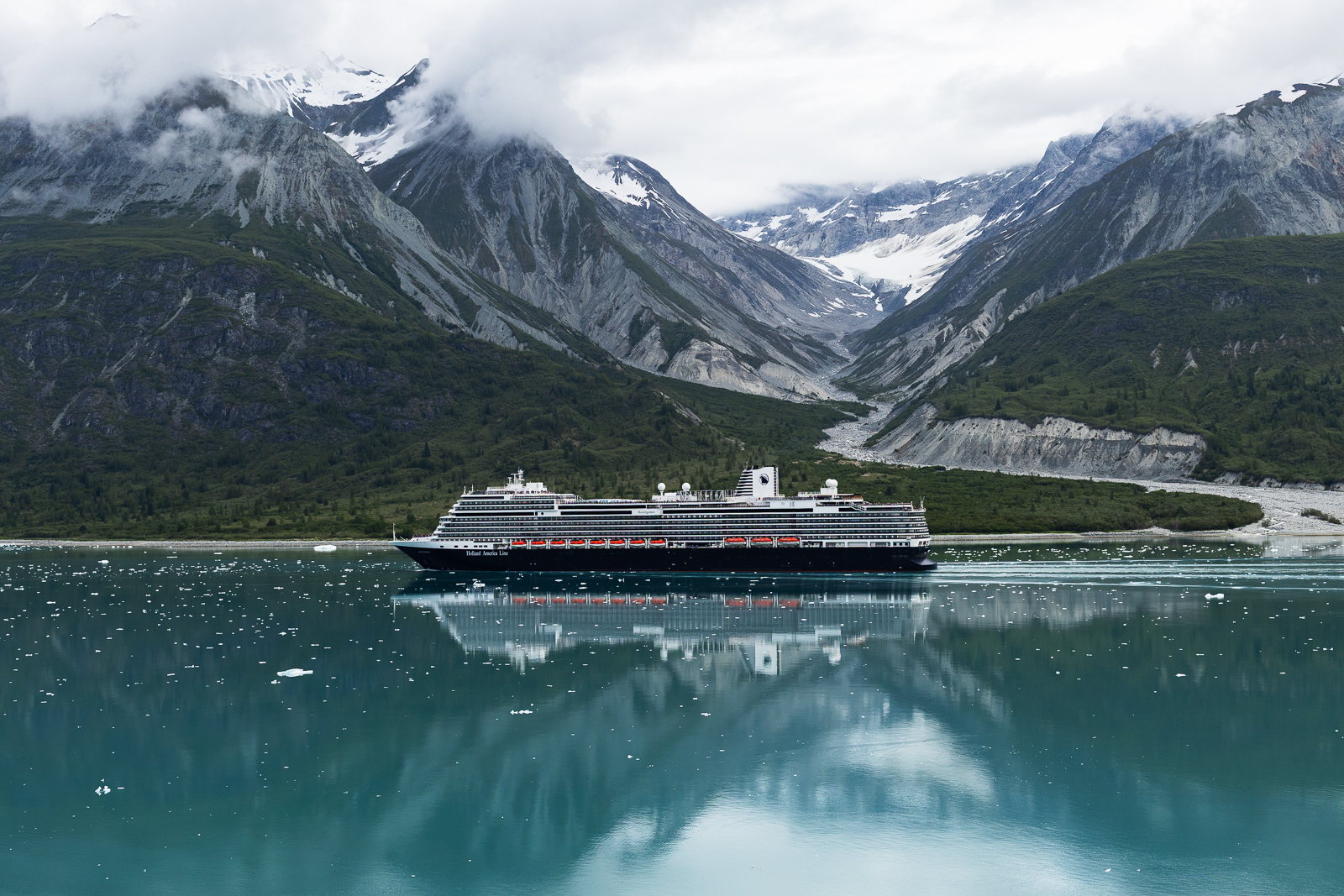
The cruise ship pulled into Glacier Bay at 6 a.m., and I almost missed it.
I’d imagined glacier-viewing as an all-day event, something you could catch anytime from the deck. Instead, the ship spent exactly three hours in the bay before sailing out. By the time I hauled myself out of bed at 8:30, we were already past the most dramatic calving spots, and the park rangers who’d boarded to narrate had finished their talks.
That’s the thing about an Alaska cruise nobody tells you upfront: the best moments happen on nature’s schedule, not yours. And unlike a road trip where you can pull over or double back, the ship keeps moving whether you’re ready or not.
The Route: What “Inside Passage” Actually Means
Most Alaska cruises follow the Inside Passage, a protected network of waterways between the mainland and a chain of islands. This matters because the water stays relatively calm (good if you’re worried about seasickness), and you’re almost always within sight of land.
Ours was a 7-night Royal Princess sailing, round-trip from Seattle in mid-July, stopping in Juneau, Skagway, Ketchikan, and Victoria BC, plus a full day cruising Glacier Bay.
The inside cabin vs. balcony question: I splurged on a balcony, and I would do it again in a heartbeat. We had our curtains open every single day. On Glacier Bay morning we ordered the deluxe balcony breakfast and ate slowly out there with the ice sliding past, then headed up to the open decks, then came back down to the balcony, and it was one of my favorite mornings of the whole trip. At every port we would step out to watch the ship pull in. It is a small space, but on a scenery cruise like this one, having your own quiet spot to take it all in was worth every dollar.

Port Days vs. Sea Days: A Different Rhythm
The cruise stopped in 4 ports. No two of our port days looked alike, though. Skagway and Ketchikan were early mornings (docked by 7 a.m.); Juneau did not dock until 1 p.m. and stayed until 9; and Victoria was a night stop, 9 p.m. to midnight. Some ports handed us thirteen hours, Ketchikan gave us six.
The most fascinating thing I learned only after the fact: the reason Victoria is such a short, after-dark stop is a US law. A quirky old shipping rule (the Passenger Vessel Services Act, on the books since 1886) requires any foreign-built cruise ship sailing round-trip from a US port to call at at least one foreign port along the way. Almost every cruise ship is foreign-flagged, so a round-trip Seattle sailing legally has to touch Canada, and Victoria is the closest, easiest answer. That is why we got a token few hours there at night: the stop exists to check a legal box, not to actually show you Victoria.
We decided this was “spend the day wandering a town” time. Instead of “you have six hours, choose your activity and commit.”
For Juneau and Skagway, I booked excursions through the cruise line 6 months before we sailed. For Ketchikan and Victoria, I skipped excursions and walked the town since we were only in port for a few hours.
The sea days, the ones where the ship just sails, ended up being my favorites. That’s when we cruised through the narrow fjords, when I actually had time to sit on deck with a book and watch the forested islands slide past, when the schedule loosened up.

What I Packed Wrong
I brought clothes for two different trips: one where I’d be hiking in the woods, one where I’d be dressing for dinner on a cruise ship. The hiking clothes were right. The dress-for-dinner clothes were used during the formal nights. But I brought too many dresses when I only needed two.
What actually got worn:
- A mix of short and long sleeved shirts as base layers
- A waterproof shell that fit over everything else
- One pair of sneakers
- Warm hat and gloves (yes, in July)
- Binoculars
- Swimsuit (I went in the hot tub once!)
What stayed in the bag:
- The extra “nice” outfits for dinner. I only dressed up on the two formal nights. The dress code was more relaxed than I expected
- I brought two dress shoes and I really only needed one pair. I did this because I was not confident that the pair I wanted to wear wouldn’t hurt (they were new).
- I also had a lightweight puffer jacket and I did not wear it once. If you’re going during another time of year, you’ll probably need this. I probably would still bring it if we did this again.
The real mistake: too many mid layers. I brought 4 fleece and 1 heavier 3/4 zip. I did not need that many. I did wear them all, but I could have rotated them and been fine.

The Wildlife Lottery
Every Alaska cruise pitches itself on wildlife, whales, bears, eagles, sea otters, etc. What they don’t tell you: sightings are pure luck.
We saw eagles constantly, they’re as common as pigeons. We saw sea otters, cute but mostly looking like floating logs until you get close. We didn’t see any black bears or whales, but heard other people talking about what they saw! In Ketchikan we saw Salmons swimming upstream.
For whales, you might be better off doing an excursion. Some other cruisers went on an excursion and came back on board with videos to share. We skipped the whale excursions because we’ve done them before and I somewhat regret it now! The reality is: nature shows you what it shows you, then moves on.
The best wildlife moment was unplanned, a few sea otter floating on their backs in Glacier Bay, completely unbothered.
Excursions: Where the Real Trip Lives

The on-ship experience was great, good food, comfortable bed, decent coffee. But an Alaska cruise is really about what you do in port.
We did three excursions, and two of them were the whole trip. The 5-Glacier Seaplane out of Juneau, a floatplane over the Juneau Icefield and five glaciers (Norris, Taku, Hole-in-the-Wall, East Twin, and West Twin), was the most jaw-dropping thing I have ever done. Then a summer dog-sled camp, also in Juneau, where the huskies pull you on a wheeled cart and the ones waiting their turn howl with jealousy the entire time. In Skagway, The White Pass railway up a 2,800-foot gold-rush pass rounded it out.
The one I almost skipped but shouldn’t have: the dog-sled camp. The one I booked and regretted: the Sanctuary for our Glacier Bay day, which I canceled the morning of once I realized it faced away from the ice. The one I wish I’d had time for: a whale-watching trip in Juneau, which other passengers would not stop raving about.
The cruise line’s excursions cost more than booking independently, but they guarantee the ship won’t leave without you if the tour runs late. For anything with tight timing (floatplane trips, glacier hikes), that guarantee was worth it. For a walking tour of a town’s historic district, I’d book independently next time.
The Weather Wild Card
Alaska in July had four seasons in one week. Sun, rain, fog so thick we couldn’t see, one brilliantly clear afternoon where every mountain was visible.
The fog was the hardest part, we sailed through Tracy Arm Fjord in soup so dense I could barely see the water. I knew intellectually that we were surrounded by thousand-foot cliffs and waterfalls, but I couldn’t see any of it. Other passengers who’d cruised the same route the week before had perfect visibility.
Pack for weather randomness. Hope for sun, plan for rain, accept that some of what you’ll see is just luck.
Would I Do It Again?
The cruise-ship format isn’t my default travel style, I like slower mornings and the ability to change plans midday. But for Alaska, where the distances are huge and the infrastructure is sparse, it worked.
What I’d do differently: sail later in the season (late August or September) for fewer crowds and lower fares. Book fewer excursions and leave more room for wandering. Care less about the on-ship dining and entertainment, that’s not what I came for.
What I’d keep the same: the balcony question is still a toss-up, but having my own space to step outside at 6 a.m. without getting fully dressed was nice, even if I only did it twice. And I’d still choose an Inside Passage route over the open-ocean alternatives, the protected waters made the whole trip more comfortable.
Alaska surprised me. Not in the ways the brochures promised, I didn’t see grizzlies fishing for salmon or whales breaching at sunset. But in smaller, quieter ways: the shock of how green everything was, how the light lasted until nearly midnight, how the glaciers looked bluer than any blue I’d seen before, how the whole week felt like traveling through someone else’s dream of what wilderness should look like.
Just set your alarm before Glacier Bay.