
 I finally did it. I finally signed up for a CSA which stands for Community Supported Agriculture.
With a CSA you pay a fee at the beginning of the season, usually in May to receive produce in the form of a “share” which you pick up directly from a local farm. We’re on our third week of the CSA pick up and I’ve gotten to know a lot of produce that I never knew existed.
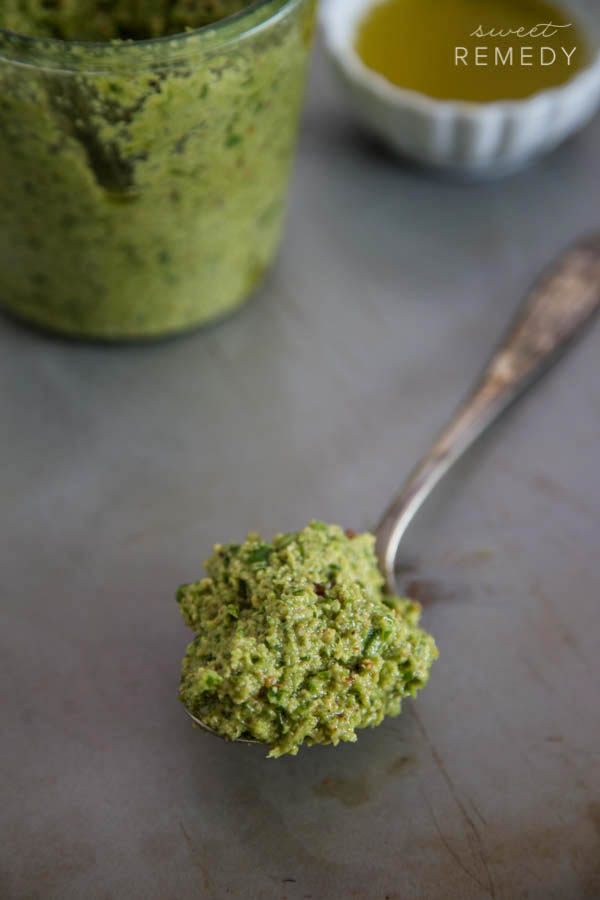
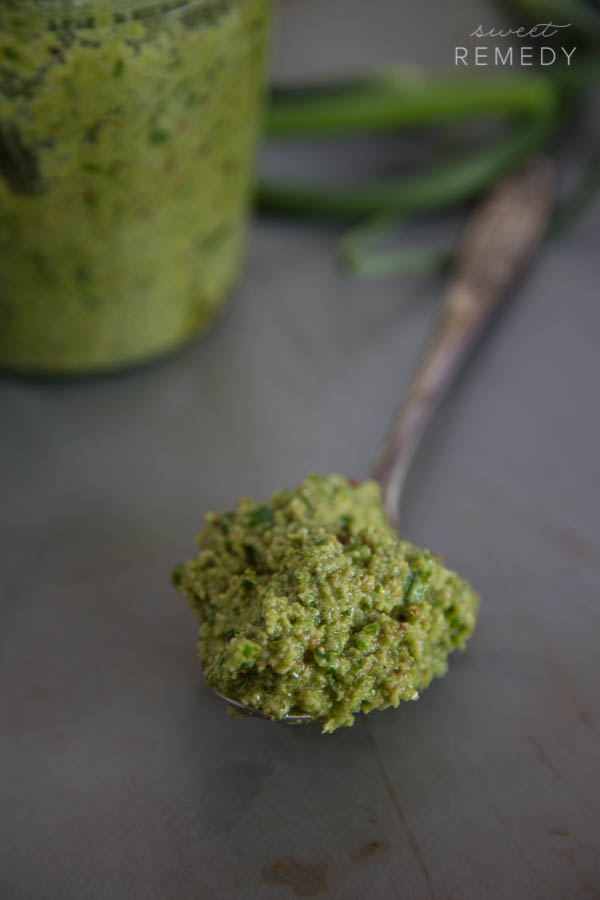
Today I’m sharing this Garlic Scape Pesto that I made with these crazy looking tubes called Garlic Scapes.
I knew all about garlic scapes already but I was excited to finally get my hands on some to experiment with. I decided to make a pesto but dress it up a little bit with pistachios and walnuts in place of pine nuts and garlic scapes (and arugula!) in place of basil.
I finally did it. I finally signed up for a CSA which stands for Community Supported Agriculture.
With a CSA you pay a fee at the beginning of the season, usually in May to receive produce in the form of a “share” which you pick up directly from a local farm. We’re on our third week of the CSA pick up and I’ve gotten to know a lot of produce that I never knew existed.
Today I’m sharing this Garlic Scape Pesto that I made with these crazy looking tubes called Garlic Scapes.
I knew all about garlic scapes already but I was excited to finally get my hands on some to experiment with. I decided to make a pesto but dress it up a little bit with pistachios and walnuts in place of pine nuts and garlic scapes (and arugula!) in place of basil.
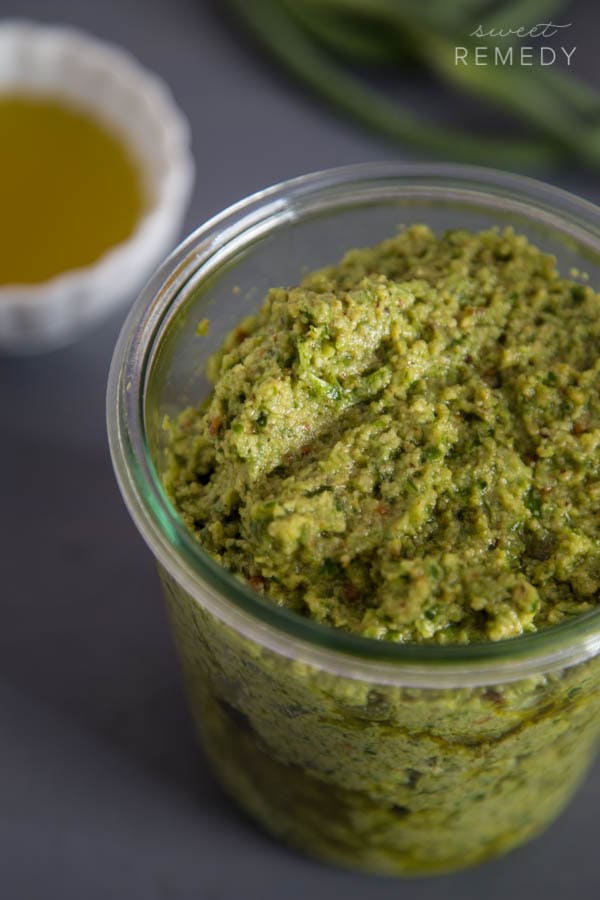 The result was a delicious concoction which was a bit bitter yet also filled with a robust garlic flavor. I was very happy with the way this came out and I used it in a pasta dish with angel hair pasta, mushrooms, fresh arugula, and goat cheese.
I’ve been eating that pasta dish every night for dinner as it made so many servings. Hey, I’m not complaining!
The result was a delicious concoction which was a bit bitter yet also filled with a robust garlic flavor. I was very happy with the way this came out and I used it in a pasta dish with angel hair pasta, mushrooms, fresh arugula, and goat cheese.
I’ve been eating that pasta dish every night for dinner as it made so many servings. Hey, I’m not complaining!
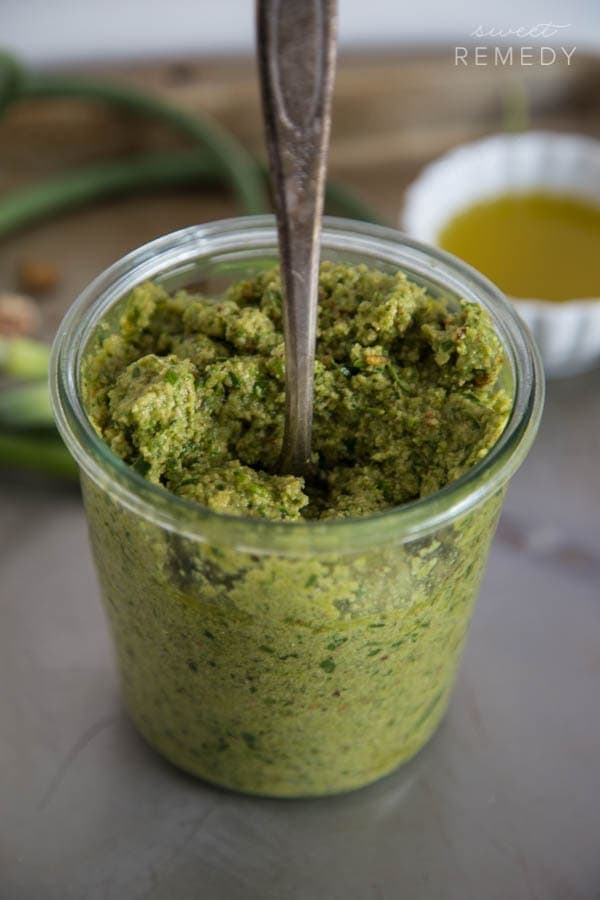
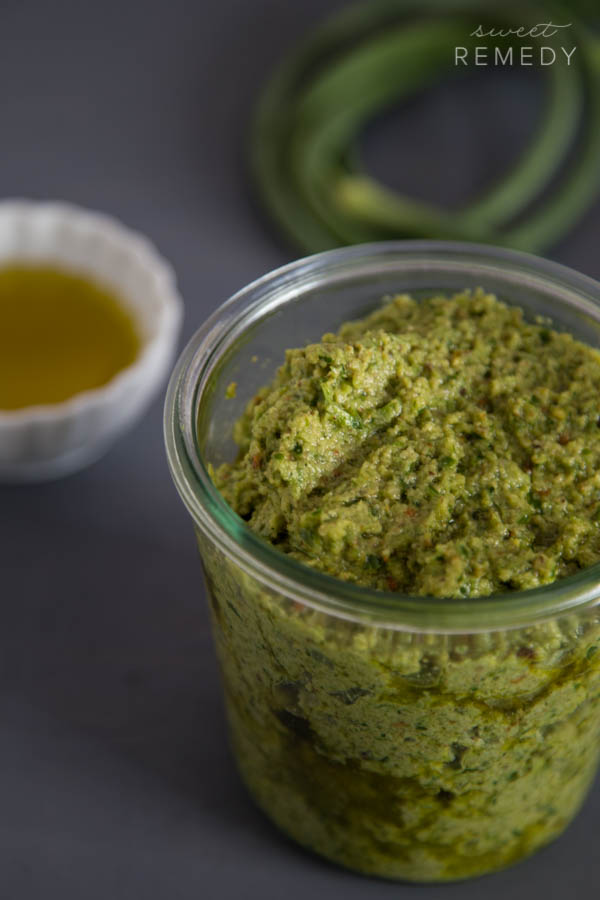 So what can you do with this pesto? The more obvious option is to put it on top of some pasta as I did. But if you are feeling adventurous you can maybe slice up some zucchini lengthwise and spread the pesto along side of the slice then roll it up into a…roll.
That actually sounds pretty good and I think I will do that for a light dinner today! Let’s be honest, you can only eat so much pasta…
So what can you do with this pesto? The more obvious option is to put it on top of some pasta as I did. But if you are feeling adventurous you can maybe slice up some zucchini lengthwise and spread the pesto along side of the slice then roll it up into a…roll.
That actually sounds pretty good and I think I will do that for a light dinner today! Let’s be honest, you can only eat so much pasta…
Garlic Scape Pesto

A classic pesto recipe with garlic scapes and arugula in place of basil. Pistachios and walnuts are used in place of pine nuts. Be sure to use a good quality olive oil to really enhance all of the other flavors.
Ingredients
- 2 1/2 cups garlic scapes
- 1/3 cup arugula
- 1/3 cup pistachios
- 1/2 cup walnuts
- 1 cup olive oil + 1 Tbsp, divided
- 1/4 cup parmesan cheese
- 1/4 tsp salt
- 1/8 tsp pepper
Instructions
- Cut the garlic scapes into one inch pieces and add to a food processor with the arugula.
- Process until they are both processed into very tiny pieces.
- Add pistachios and walnuts and half of the olive oil.
- Turn the food processor back on and process until incorporated and scrape the sides with a spatula.
- Add the remaining oil, parmesan cheese, salt and pepper.
- Process again until combined. Using a spatula, scoop out the pesto and put in a glass jar with a lid.
- Add a tablespoon of olive oil to the top and cover.
- Store in the refrigerator for 1-2 weeks.
Recommended Products
This post contains affiliate links. I will make a small commission if you make a purchase through one of these links, at no extra cost to you.


Nutrition Information:
Yield:
16Serving Size:
1Amount Per Serving: Calories: 82Total Fat: 5gSaturated Fat: 1gTrans Fat: 0gUnsaturated Fat: 4gCholesterol: 1mgSodium: 79mgCarbohydrates: 8gFiber: 1gSugar: 1gProtein: 3g
Nutrition information isn’t always accurate. You may want to spot check this information.
What Are Garlic Scapes and When to Find Them?
Garlic scapes are the long, curly green shoots that grow from hardneck garlic varieties during late spring and early summer—usually between May and June depending on your region. They look a bit like a cross between a scallion and a whip, with a mild garlic flavor that’s much more subtle than the bulb itself. You’ll find them at farmers markets and CSA pickups during peak season, and they’re wonderfully versatile in the kitchen since you can use the entire stalk, from the tender tip to the firmer base. If you can’t find fresh scapes, you can order them online from specialty produce suppliers, though using them quickly after purchase is best since they don’t store for more than a week or two in the fridge.
Why Garlic Scapes Make Amazing Pesto
Garlic scapes are the curly, tender shoots that grow from hardneck garlic varieties, and they’re absolutely perfect for pesto because they deliver that punchy garlic flavor without the harshness of raw cloves. Since they’re milder and slightly sweet with a hint of vegetal freshness, they work beautifully as the star ingredient instead of basil—you get all the aromatic allure of garlic pesto without it becoming an overwhelming, mouth-burning situation. Their tender texture also means they blend into a silky sauce effortlessly, creating a pesto that’s complex and layered rather than one-note. If you can’t find garlic scapes at your farmers market or CSA, they’re typically available in late spring and early summer, so plan accordingly or ask your local grower when they’ll have them in stock.
How to Store Fresh Garlic Scapes
Fresh garlic scapes will keep in the refrigerator for up to two weeks when stored properly—wrap them loosely in a damp paper towel and place them in a plastic bag in your crisper drawer. If you’ve got a bunch and want to preserve them longer, blanch and freeze them in ice cube trays with a bit of olive oil for easy portioning later. You can also chop them up and freeze them directly in an airtight container, though they’ll lose some of their crisp texture when thawed. The key is keeping them away from ethylene-producing fruits like apples and avocados, which can cause them to yellow and soften faster. Since scapes are most tender and flavorful in spring, try to use them within a few days of purchase for the best results.
Make-Ahead Tips for Pesto Season
This pesto keeps beautifully in the fridge for up to five days in an airtight container, making it perfect for meal prep when garlic scapes are at their peak. If you want to stretch your supply even further, freeze it in ice cube trays—pop out the frozen cubes and store them in a freezer bag for up to three months. Just leave out the nuts when freezing, then stir them in fresh when you thaw a portion, since nuts can turn slightly bitter over time in the freezer. I also recommend freezing it without any added lemon juice or salt, then seasoning to taste once it’s thawed, since flavors can shift during storage. This way you’ll have homemade garlic scape pesto on hand whenever a pasta craving strikes, even long after scapes are out of season.
Frequently Asked Questions About Garlic Scapes
Garlic scapes are the flowering stems that grow from hardneck garlic varieties—they look like coiled green tubes and taste like a milder, slightly sweet version of garlic with a hint of herbaceousness. You’ll typically find them at farmers markets and CSA pickups in late spring or early summer, right before they’re harvested to redirect the plant’s energy toward bulb development. The tender upper portion (the coiled "scape") is the most flavorful and tender part to eat, while the lower stem can be slightly fibrous but still delicious when chopped finely. Since they have a gentler garlic punch than cloves, they’re perfect for situations where you want garlic flavor without overwhelming a dish—think pesto, stir-fries, soups, or even grilled whole as a side vegetable. If you can’t find fresh scapes, you can substitute them with a combination of chopped garlic cloves and fresh green onions to get a similar balance of flavors.
Benefits of Using Garlic Scapes in Pesto
Garlic scapes offer a milder, fresher garlic punch compared to raw garlic cloves, making them perfect for pesto where you want flavor without overwhelming heat or harshness. They’re also wonderfully tender and blend smoothly into creamy sauces, so you won’t get those sharp, raw garlic bits that can sometimes catch in your teeth. Since scapes are seasonal and often overlooked, using them in pesto is a smart way to capture that spring harvest flavor and reduce kitchen waste. Plus, their subtle sweetness plays beautifully with nutty ingredients like walnuts and pistachios, creating a more complex and sophisticated pesto than traditional basil versions.
Benefits of Garlic Scapes in Cooking
Garlic scapes are a fantastic ingredient that often gets overlooked—they’re the curly green stalks that grow from hardneck garlic varieties and have a mild, fresh garlic flavor without the intensity of cloves. Using them in cooking means you get that robust garlic taste the recipe calls for while maintaining a delicate, almost herbaceous quality that works beautifully in pestos, dressings, and stir-fries. They’re also incredibly versatile because they’re tender enough to blend into sauces but sturdy enough to grill whole or chop into pastas. Since garlic scapes have a short season (usually late spring through early summer), they’re perfect for CSA members looking to make the most of their seasonal harvests. Best of all, they cost far less than garlic cloves and give you way more usable vegetable—it’s a win-win for your wallet and your dishes.
How to Store Garlic Scapes for Later Use
Garlic scapes keep best when stored in the refrigerator’s crisper drawer, where they’ll stay fresh for about two weeks in a plastic bag or sealed container. If you want to preserve them longer, you can blanch and freeze them for up to three months—just trim them into 2-inch pieces, blanch for 2 minutes, shock in ice water, drain well, and freeze in a single layer before transferring to freezer bags. You can also make this pesto in larger batches and freeze it in ice cube trays, giving you convenient portions to thaw and use throughout the year. Since scapes have such a short season (usually late spring through early summer), freezing is your best bet for enjoying them beyond those few weeks when they’re available at farmers markets or your CSA pickup.
🛒 Shop the tools I used in this recipe
- KitchenAid Stand Mixer Bowl
- KitchenAid 7-Cup Food Processor
- Silicone Spatula Set of 6
- Ball Mason Jar Lids
Browse all my kitchen favorites in my Kitchen Essentials on Amazon.


