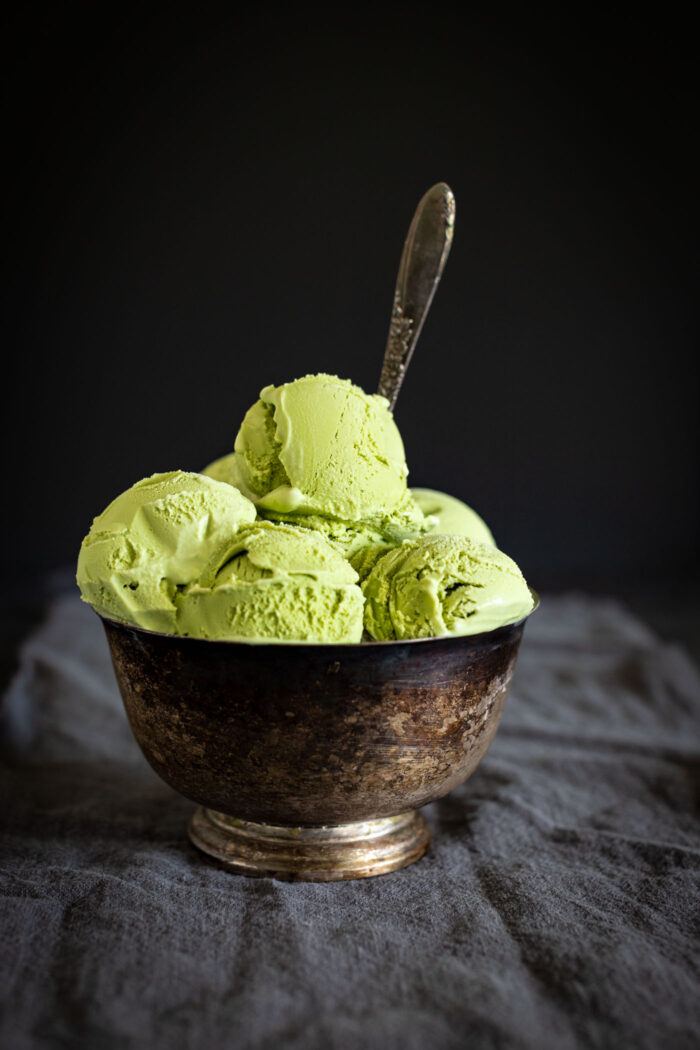
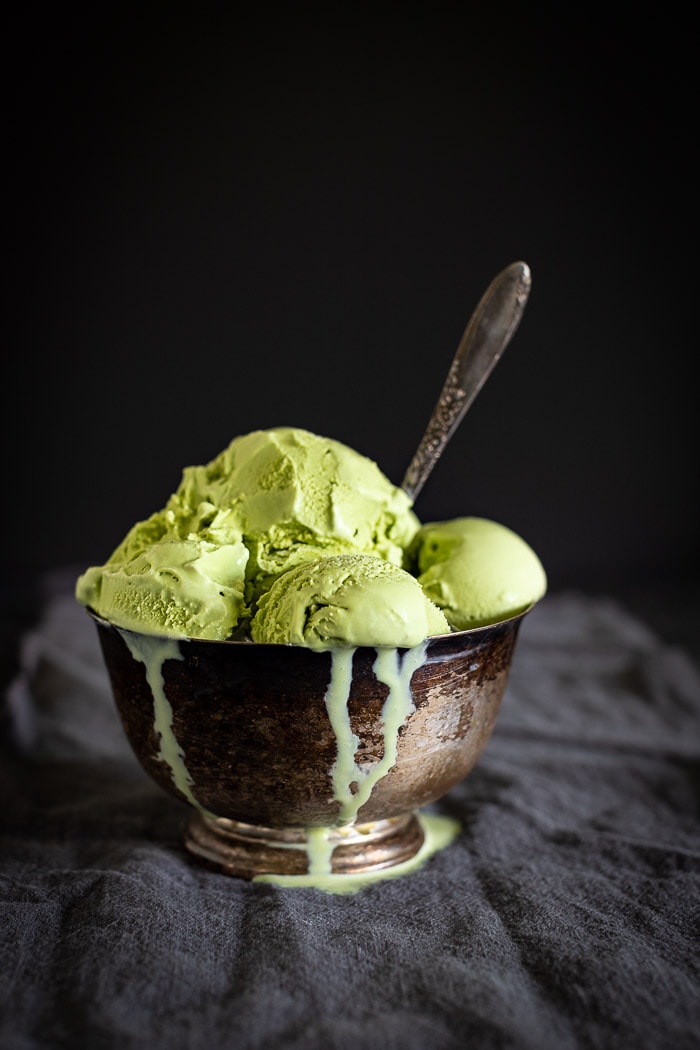
You could say I am obsessed with Green Tea. I adore it.
You bet that if something is offered in a green tea flavor, I am all about it.
Some of my favorite green tea things:
- Starbucks frappuccino
- Bubble tea
- Mochi
- Good ole hot green tea
- Iced green tea
…and of course… ice cream.
I remember the first time I had Green Tea ice cream.
I was at a local Japanese restaurant and it was fantastic.
There is something so refreshing about the taste.
I know that I feel better about eating ice cream or drinking a 400 calorie beverage when it’s green.
Maybe now I can justify drinking Shamrock milkshakes from McDonald’s.
Just kidding…
What is Matcha Powder?
Matcha powder is green tea that is finely ground up into a powder.
It is traditionally mixed with hot water to make a frothy drink but we have found all types of creative uses for it such as bubble tea, matcha lattes, and we can’t forget about this ice cream!
You can find it at most specialty spice stores and perhaps even your local grocery store. It’s much easier to find lately!
What do you need to Make Green Tea Ice Cream?
To make green tea ice cream you will need some basic ingredients such as heavy cream, milk, eggs, sugar and eggs but you’ll also need some more specialty tools and ingredients such as…
An Ice Cream Machine: My favorite is this attachment for my kitchen aid mixer.
Matcha Powder: This powder gives us the beautiful green hue and the green tea flavoring.

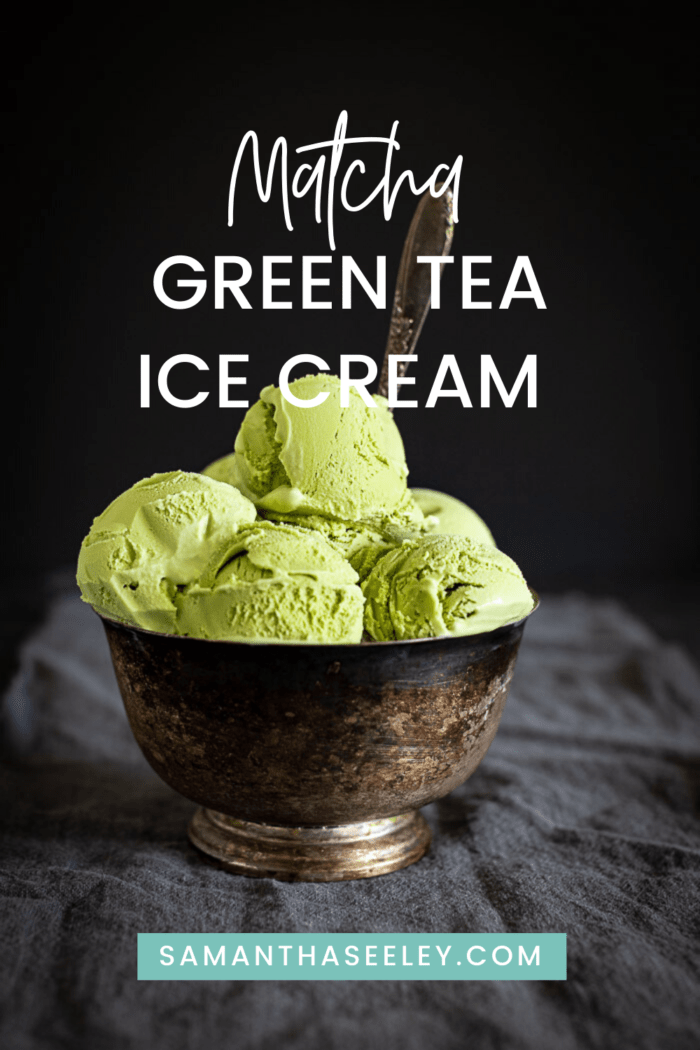
Matcha Green Tea Ice Cream
Ingredients
- 1 1/2 cups heavy cream
- 1 1/2 cups milk
- 1/8 teaspoon salt
- 2 tablespoons green tea powder
- 5 eggs
- 1/3 cup sugar
Instructions
- In a medium saucepan over medium heat, bring the cream, milk and salt to a bare simmer.
- Whisk in the green tea powder until dissolved.
- Meanwhile, in a medium bowl, whisk together the eggs and sugar.
- Whisk 1 cup of the hot cream mixture into the egg mixture to temper the eggs, then slowly pour the eggs into the saucepan, stirring constantly with a wooden spoon.
- Continue to cook over medium heat, stirring constantly, until the mixture thickens to a custard (it will be thick enough to coat the back of the spoon).
- Immediately remove the pan from the heat and strain the custard into a medium bowl set over a bowl of ice water.
- Stir the custard until it is cold.
- Process the custard in an ice cream maker until thick, then transfer to an airtight container and freeze until hardened, approximately 8 hours.
Recommended Products
This post contains affiliate links. I will make a small commission if you make a purchase through one of these links, at no extra cost to you.
Nutrition Information:
Yield:
8Serving Size:
1Amount Per Serving: Calories: 252Total Fat: 20gSaturated Fat: 12gTrans Fat: 1gUnsaturated Fat: 7gCholesterol: 170mgSodium: 112mgCarbohydrates: 12gFiber: 0gSugar: 10gProtein: 7g
Nutrition information isn’t always accurate. You may want to spot check this information.
Why Make Homemade Matcha Ice Cream
Homemade matcha ice cream puts you in complete control of the matcha quality and sweetness level, which means you can use premium ceremonial-grade powder for a more vibrant flavor instead of the culinary-grade stuff that sometimes tastes bitter or grassy. Store-bought versions often contain stabilizers and additives that can give the ice cream a slightly icy texture, but making it yourself guarantees that creamy, luxurious mouthfeel that melts perfectly on your tongue. Plus, there’s something incredibly satisfying about serving a bright green, restaurant-quality dessert that you made in your own kitchen—your guests will be genuinely impressed, and honestly, it costs way less than buying matcha ice cream from a specialty shop.
The Best Matcha Powder for Ice Cream
When shopping for matcha powder, look for vibrant, bright green varieties—that color is your first clue that it’s fresh and high quality. I recommend culinary-grade matcha rather than ceremonial grade for this recipe, since you’re blending it into a creamy base anyway and don’t need the premium stuff reserved for traditional whisking. Check the ingredient list to make sure it’s pure matcha with no additives or fillers, and store it in an airtight container away from light and heat to preserve that grassy, slightly sweet flavor. If your local specialty spice store doesn’t carry it, most grocery stores now stock it in the tea or natural foods section, and online options like Amazon make it super convenient to grab a tin.
Equipment You'll Need (No Ice Cream Maker Required!)
The beauty of this no-churn method is that you literally only need a freezer and a whisk—no fancy ice cream machine required. A stand mixer or hand mixer will make churning the cream easier and faster, but honestly, a little elbow grease with a whisk works just fine if that’s all you have on hand. You’ll also want a loaf pan or similar freezer-safe container to hold your mixture while it sets, plus a spatula for folding everything together. The simplicity is part of why I love this recipe so much—it removes the barrier to homemade ice cream without sacrificing that creamy, luxurious texture you’d get from a traditional churned batch.
Step-by-Step Matcha Ice Cream Recipe
This no-churn matcha ice cream comes together in just a few steps, and you don’t need any fancy equipment beyond a blender and freezer. Start by whisking together 2 cups heavy cream, 1 cup whole milk, ¾ cup sugar, and 3 tablespoons matcha powder until the mixture is completely smooth and the matcha is fully dissolved (no lumps!). Pour the base into a shallow freezer-safe container and freeze for about 6-8 hours, stirring vigorously every 2 hours to break up ice crystals and create that signature creamy texture. The key to super creamy results is those frequent stirs—they prevent large ice crystals from forming and give you that luxurious mouthfeel you’d get from an ice cream machine. Once it’s scoopable, you’ve got homemade matcha ice cream that tastes just like what you’d find at a Japanese restaurant, without any special equipment required.
How to Get the Perfect Matcha Flavor
The key to great matcha flavor is using high-quality powder—look for a vibrant green color rather than dull or brownish shades, which indicate older or lower-grade matcha. Start by whisking your matcha with a little warm water (not boiling) to create a smooth paste before adding it to your ice cream base; this prevents clumpy bits and ensures even distribution. Don’t skip the sifting step if your matcha is lumpy, and be careful not to overbeat once you’ve added it, as matcha can become bitter with too much agitation. If you find the flavor too subtle, you can bump up the amount slightly, but remember that the taste concentrates as it freezes, so it’ll be more pronounced in the final scoop than in the raw mixture.
Troubleshooting Common Matcha Ice Cream Problems
If your matcha ice cream turns out icy or grainy instead of creamy, it’s usually because the mixture wasn’t churned long enough or your ice cream maker bowl wasn’t cold enough before you started. Make sure you freeze that bowl for at least 24 hours beforehand, and don’t skip the churning time—aim for 20-25 minutes until it reaches soft-serve consistency. If you’re getting a bitter or slightly chalky taste, you might be using too much matcha powder; start with 2-3 tablespoons per quart and adjust to your preference, since matcha quality varies by brand. One more thing: if your ice cream won’t freeze solid in the freezer after churning, your custard base might be too high in fat, so try reducing the heavy cream slightly next time or ensuring your freezer is at 0°F or below.
Storage Tips for Homemade Ice Cream
Store your matcha ice cream in an airtight container in the freezer for up to two weeks—it’ll stay perfectly scoopable and won’t develop those icy crystals that homemade ice cream is notorious for. The key is keeping it away from the back of your freezer where temperature fluctuations happen most, so pop it on a shelf closer to the door if you can. If it does get rock-hard, let it sit on the counter for 5–10 minutes before scooping for that ideal creamy texture. Pro tip: press a piece of parchment paper directly onto the surface before sealing the container to minimize freezer burn and keep that beautiful green color vibrant.
Matcha Ice Cream Variations to Try
Once you’ve mastered the basic recipe, there are so many delicious directions to take it! Try swirling in white chocolate ganache or a dark chocolate ribbon for a classic pairing, or go the route of adding a subtle sesame oil drizzle and toasted sesame seeds for an earthy, nutty twist. For something more adventurous, fold in a touch of yuzu juice or lemon zest to brighten up the grassy matcha notes, or keep it simple with a sprinkle of black sesame on top. You could even make it dessert-forward by creating a matcha-mochi swirl or layering it with a red bean paste for an authentic Japanese-inspired treat.
Serving Suggestions and Toppings
Matcha ice cream is wonderfully versatile, so don’t be shy about getting creative with toppings and pairings. A drizzle of white chocolate sauce or a sprinkle of black sesame seeds adds both visual contrast and complementary flavors that elevate the earthy matcha. For a more indulgent approach, try serving it alongside mochi, dorayaki (red bean pancakes), or a delicate butter cookie—these traditional Japanese treats make matcha ice cream feel like a special dessert experience. If you want to keep it simple, a light dusting of extra matcha powder on top not only looks Instagram-worthy but reinforces that green tea flavor in the best way.
Make-Ahead Tips for Summer Entertaining
You can prepare the ice cream base up to 2 days ahead—just whisk together the matcha powder, sugar, egg yolks, milk, and cream, then cover and refrigerate until you’re ready to churn. This actually helps the flavors meld together beautifully and makes for an even creamier texture. If you’re churning the day of your party, you can do it a few hours before guests arrive and let it firm up in the freezer, so you’re not stuck in the kitchen when people show up. Pro tip: scoop the ice cream onto a parchment-lined baking sheet and freeze the scoops ahead of time, then transfer them to a container—this way you can serve perfect portions without any last-minute effort!